The Madinah market: growing visitor numbers and a diverse local economy
Madinah’s visitor numbers are clearly growing: more than 18 million visitors in 2024, up from 8.2 million in 2022, according to a Madinah Chamber of Commerce report. That growth shows in the hotels, restaurants, transport and gift shops around the Prophet’s Mosque, at Prince Mohammad bin Abdulaziz International Airport, and on the Haramain railway that links Madinah with Makkah and Jeddah. But Madinah is not just one big hotel. It is the Kingdom’s fourth most populous city by the 2022 census, home to the Islamic University, Taibah University and residential districts that keep expanding.
The city moves at a calmer pace than Makkah. Visitors usually spend part of an Umrah or Hajj journey here, moving between the Prophet’s Mosque, Quba Mosque, Mount Uhud and the markets, and buying dates and gifts before they leave. That gives businesses several chances to appear during the same trip: on the map, then in an ad, then through a recommendation from a travel companion.
Residents, meanwhile, form a market of their own: clinics, schools, family restaurants and online stores, many of which do not depend on visitors at all. So we start by defining the audience precisely, then choose the channel, message and timing that fit it, instead of a broad campaign that tries to reach everyone.
Marketing channels that fit Madinah
For visitor facing businesses, the list starts with Google: search campaigns in visitors’ main languages on phrases like “hotel near the Prophet’s Mosque”, “Madinah ziyarah tour” or “authentic Ajwa dates”, plus a Google Maps profile complete with photos, reviews and hours, because visitors decide while walking around the Central Area. We add SEO for store or hotel pages so visitors can find them before their trip.
For date and gift sellers, branding and packaging are the first ad. A box of Madinah dates is given as a gift in Jakarta, Karachi or Riyadh, and the person who receives it can become a customer through your online store if the brand is clear and ordering is easy. So we work on visual identity, packaging and product pages, then run Meta and Snapchat ads aimed at people who have visited Madinah or are interested in Umrah, with shipping within the Kingdom and abroad as the store’s capacity allows.
For residents, the usual Saudi channels work: Snapchat for restaurants and neighbourhood offers, Instagram for family brands and cafes, and Google for services. Across all content we keep a calm, respectful tone that suits the city, free of noise and exaggeration, because that is what its audience expects from brands that carry its name.
Madinah’s seasons: Ramadan, Hajj and the date harvest
Ramadan is Madinah’s biggest season, expected to start around 8 February 2027. The Prophet’s Mosque fills, restaurants and cafes stay open until suhoor, and demand for hotels, dates and gifts rises. We prepare campaigns weeks ahead, update opening hours on Google profiles, and aim date and gift ads at the last days of a visit, when visitors shop for family and friends back home.
Hajj season, with the Hajj days expected from 14 to 19 May 2027, brings Madinah two waves: pilgrims who visit before Hajj and others who come after, so demand stretches for weeks on either side. The standout local season is the summer date harvest; the Madinah Date Season opened in July 2026 under the patronage of the region’s governor. It is the moment for date sellers to launch new products, wholesale campaigns and corporate gifting.
Residents have their own dates: the school year in Madinah starts on 29 August 2027, as in Makkah and Jeddah, summer break starts around 1 July, National Day falls on 23 September and White Friday on 26 November. We always note that Hijri dates are expected and can move by a day or two with the moon sighting, so we build plans with enough flexibility to bring a campaign forward or push it back.
A worked example: a dates store selling to visitors and the whole Kingdom
Imagine a dates store with a branch near the Central Area and an online shop that wants to sell to visitors during their trip and keep selling to them once they are home. We start with branding and packaging: a box that tells the origin and variety of the dates in Arabic and English, a QR code that leads to the online store, and a small card with an offer for the next order.
Then we build three layers of campaigns. The first runs on Google Maps and Search around the Central Area in visitors’ main languages, for people looking for Ajwa dates or gifts from Madinah. The second runs Snapchat and Instagram ads in residential districts for everyday orders and date platters for Ramadan and occasions. The third retargets past site visitors and buyers with offers before Ramadan and before Hajj season, with shipping to cities across the Kingdom.
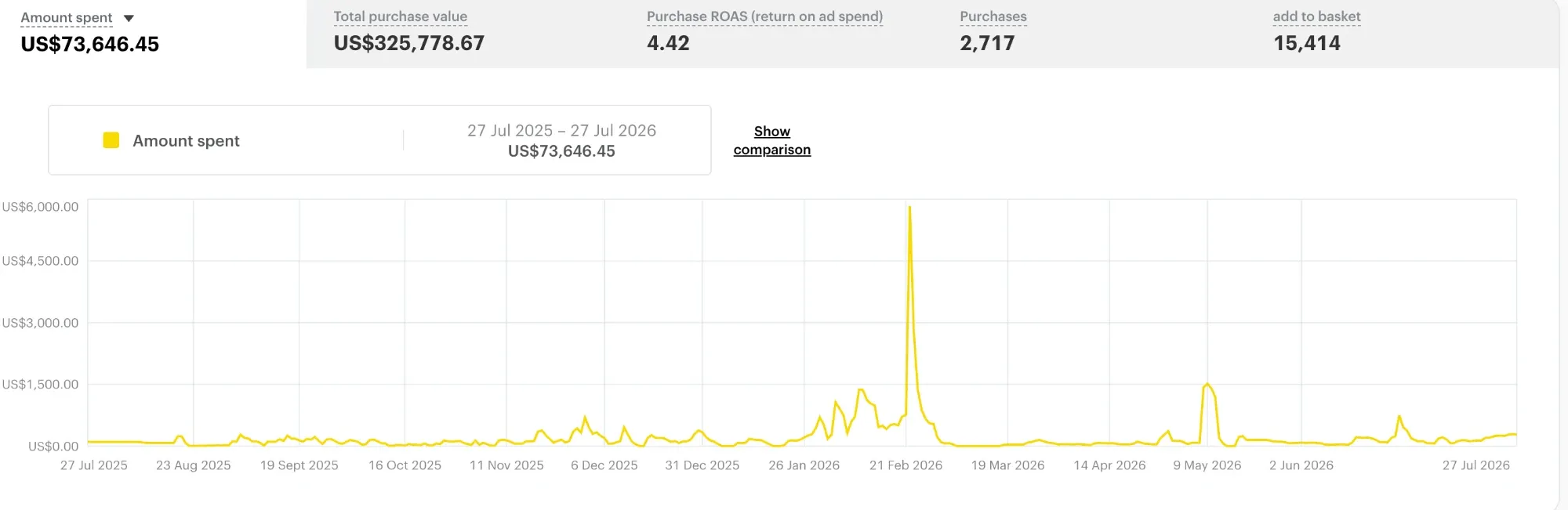
We judge results on three numbers: branch sales from Maps visits, online store sales, and the share of customers who reorder after leaving Madinah. From our ecommerce work, one Snapchat account generated US$325.8K in purchase value from US$73.6K of spend over 12 months, a 4.42x return, the kind of performance we build through constant testing rather than guesswork.